Not All Feedback Is Equal: A Framework for Prioritizing What Really Matters
Focus on the feedback that fuels product growth—without getting lost in the noise
As a product designer working in early-stage startups, I’ve seen firsthand how overwhelming feedback can be. It comes in constantly—from customers, prospects, former users, investors, friends, and more. Some of it’s valuable, some of it’s noise, and some of it—if you chase it blindly—can actually lead your product astray.
That’s why I built this product feedback framework.
It’s inspired by the strategy developed by Rahul Vohra of Superhuman, but refined through experience developing fast-moving products with tight timelines and limited resources. It’s my way of separating signal from noise, especially when every decision can make or break your business.
Why Not All Feedback Deserves Equal Weight
Startups live or die by their product decisions. When you're building fast, you can't chase every idea. Instead, you need a system for prioritizing the feedback that matters most—feedback that grows your product, improves retention, and helps convert the next wave of power users.
Does this person currently experience the pain our product solves?
If not, their feedback likely won’t drive meaningful change. It’s not that it's useless—but in a resource-constrained environment, it's lower priority. If they do experience the pain, the next questions help us understand how much their opinion should weigh in our roadmap.
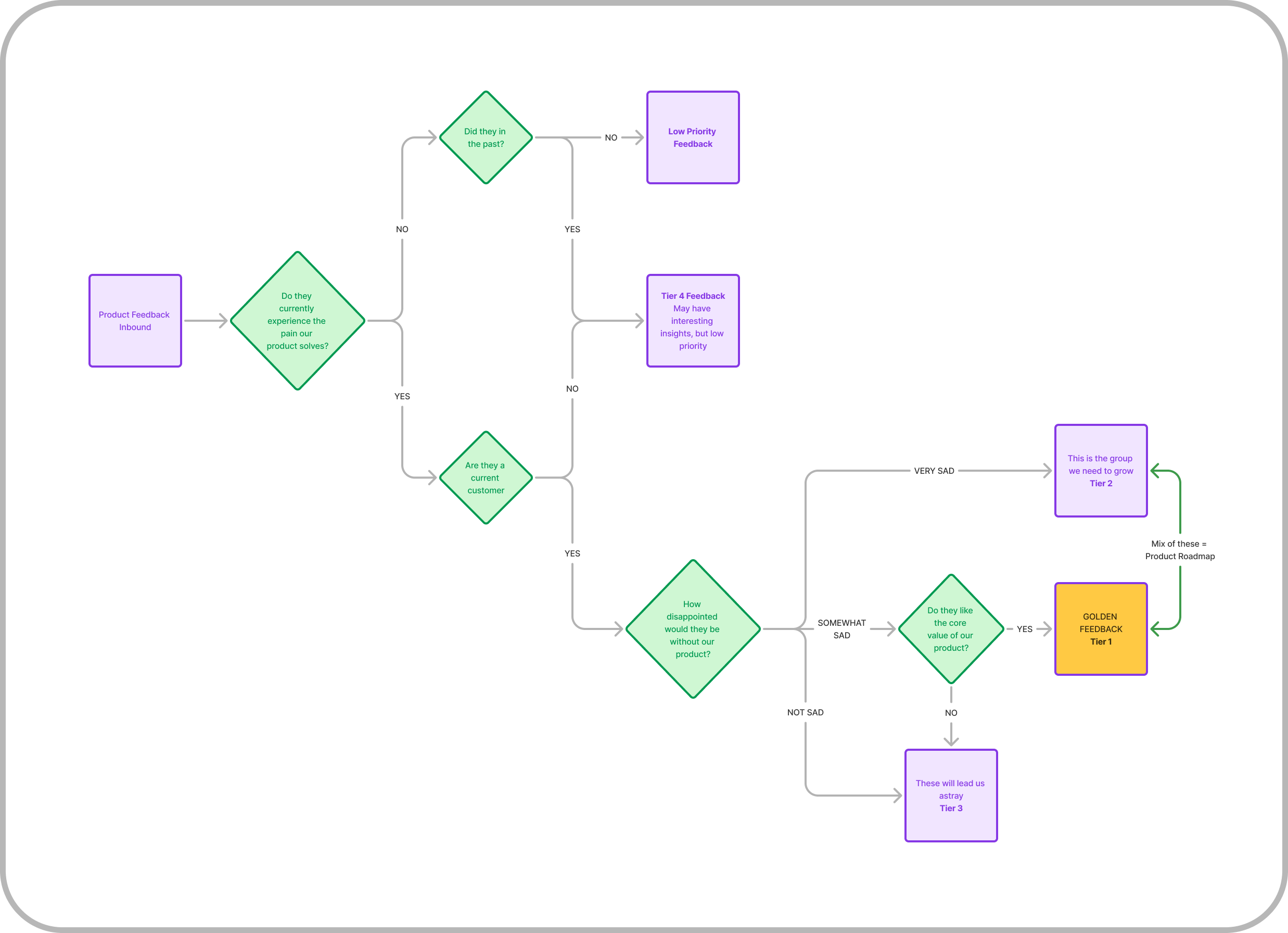
The Feedback Prioritization Flow
- Do they currently experience the pain our product solves?
- If no, did they in the past?
- If not → Low Priority Feedback
- If yes → Tier 4 Feedback (interesting, but low urgency)
- If no, did they in the past?
- If yes, are they a current customer?
- If not → Tier 2 Feedback (these are your biggest growth opportunities)
- If yes, how disappointed would they be without the product?
- If not very → Tier 3 Feedback (may lead you astray)
- If somewhat or very disappointed, continue...
- Do they love the core value of the product?
- If yes → Golden Feedback (Tier 1)
- If no → still Tier 3 (not aligned with your direction)
How This Framework Helps You Focus
This approach helps you identify and elevate the right voices:
- Tier 1: People who feel the pain and could become loyal customers—your north star
- Tier 2: Devoted users who love your core value—huge growth opportunity
- Tier 3: Feedback from misaligned users—often misleading
- Tier 4 / Low Priority: Insightful, but not urgent or strategically useful right now
It reminds you not to over-index on feedback from people who don’t feel the pain or who don’t use your product today. Instead, it helps you center your roadmap around what expands real value.
Final Thoughts
Great product feedback isn’t just about volume. It’s about context—who it's from, what they're experiencing, and whether they align with your product’s core value.
By applying this framework, you can navigate product feedback with clarity—and spend your energy building the right things, for the right people.